Dahlia Information
Thank you for purchasing a mystery bag of dahlias from Lily & Sage Farm!
What you have in front of you is a random bunch of tubers taken from out many seed varieties we grew last year. All of these tubers could be a different type of Single, Double, Cactus, Novelty Open, Peony, Collarette or double…. Crazy right? And they are all 100% brand new, never before existing flowers.(Until last season that is)
Dahlias grow two ways
- From the seed of the mama plant or the tuber of the mama plant.
Seeds from dahlias create a never before seen, never before existed and dahlia. Each seed collected from the dead flower head possesses nothing but potential. Every seed will be a unique new dahlia. (you can collect yours and the end of the season!
Tubers from dahlias are a clone copy of the mama plant.
So what YOU have in front of you is a second generation plant who was grown uniquely at Lily & Sage Farm. SO COOL!
Dahlia plants are a great summer crop. They do very well in heat and are a cut and come again flower. The more you cut them, the more the flower. The dahlia season is from mid July till the first frost in mid October.
Dahlias are NOT cold hardy and very sensitive to frost.
Parts of your Dahlia

To begin, a dahlia tuber has 3 parts.
The body, the neck, and the eyes.
You need all three parts on a tuber to make
the tuber grow.
Eyes can be the most difficult to distinguish but are the most crucial part to the plant flowering. The only way you get a flower from a healthy tuber with a neck is to have an “eye” THIS is where the flower comes out. Without it, the tuber is a dud.
Your tubers have all been checked and have at least one eye on them. See if you can find them.
Planting your Dahlia
Dahlias need room. Both for their root systems and their flowers. If you have the space, Dahlias do well at 12 inch spacing. Depending what room you have available tubers can be laid flat with the eye facing up or in the hole you have dug eyes up.
Plant depth is 4-6 inches. If you have heavy clay soil 4 inches, if you have light airy soil 6 inches.
Watering tips: after you plant your dahlia tubers it is best not to water them until you see green poking up from the ground. when you see green, then you can water. Dahlias don’t like to be wet, so pay attention to weather patterns and the forecast and you will do great!
Feed your Dahlias
Like all things that grow you need to feed them if you want the best results. Dahlias don’t need a high nitrogen content; they push out greens well even if the soil is low average. What you want is a fertilizer that feeds the flower production. We use Dr.Earth Organic Bud & Blossom Booster. For those of you who like to nerd out on fertilizer info, it is a 3-9-4 fertilizer.
*A quick note about fertilizing and amending your beds, pots, gardens…etc. ALWAYS use an organic mix. It is best for your garden long term and it also feeds the microbes in the soil. Soil regeneration is key to a healthy long lasting garden. It is also better for your health in the long run. .
seeding Dahlia: Mixed
Description
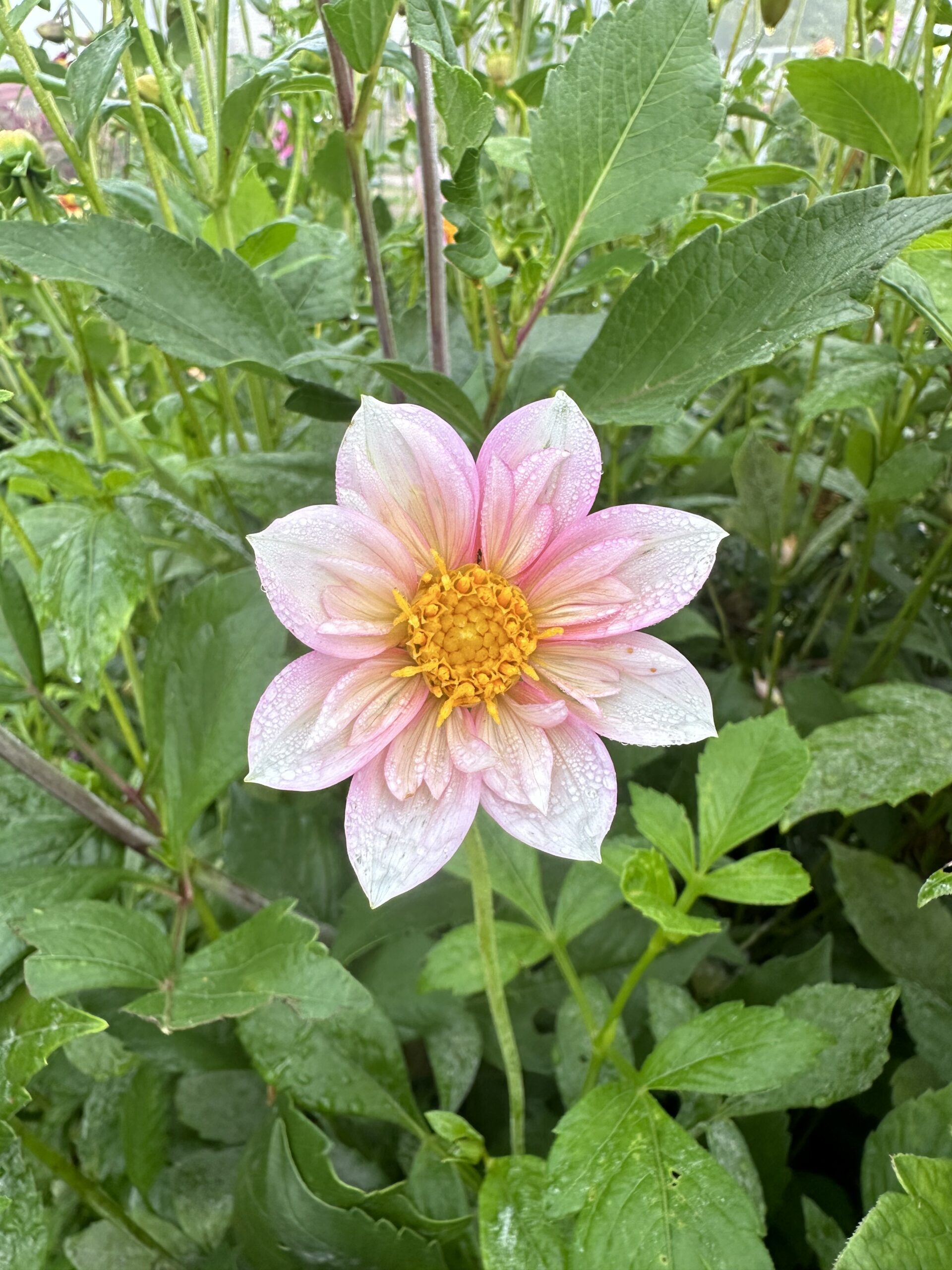
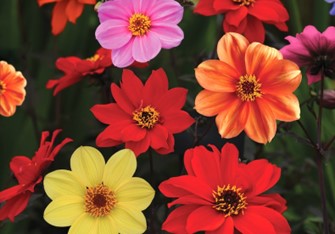
These Dahlias are seeds grown at Lily & Sage Farm that include a wide range of shapes, sizes, and colors—no two plants will be the same! Most of the flowers will have open centers, which will attract lots of pollinators to your garden. If you discover a variety you love, tubers can be saved and planted out the following year.
Details
Planting depth: ¼ in
Germination soil temp: 60°F–70°F
Days to germination: 5 to 12 days
Site: full sun
Plant spacing: 12 in
Pinch: when 12 in tall
Days to maturity: 100 to 120 days
Height: 48 to 72 in
Seed Sowing & Growing Notes
Sow seeds indoors in trays or pots 4 to 8 weeks before your last frost. Dahlias have a tendency to germinate sporadically, so be patient. Wait until the weather is consistently warm before transitioning young plants into the garden. Direct-seeding dahlias is not recommended. Personally I sow them 10 weeks before last frost in deep cell trays. My trays are 50 cell trays that are 6in deep. Works great!
Harvesting/Vase Life
Dahlias don’t open much once they’ve been harvested so it’s important to not pick them too early. Harvest when blooms are three-quarters of the way open, but not overly ripe. Check the back of each flower head, looking for firm and lush petals versus papery or slightly dehydrated ones. Place into water with a hydrator or sear stem ends by placing into 160°F to 180°F (just off boiling) water and allow to cool for one hour. Expect a vase life of 5 days.